
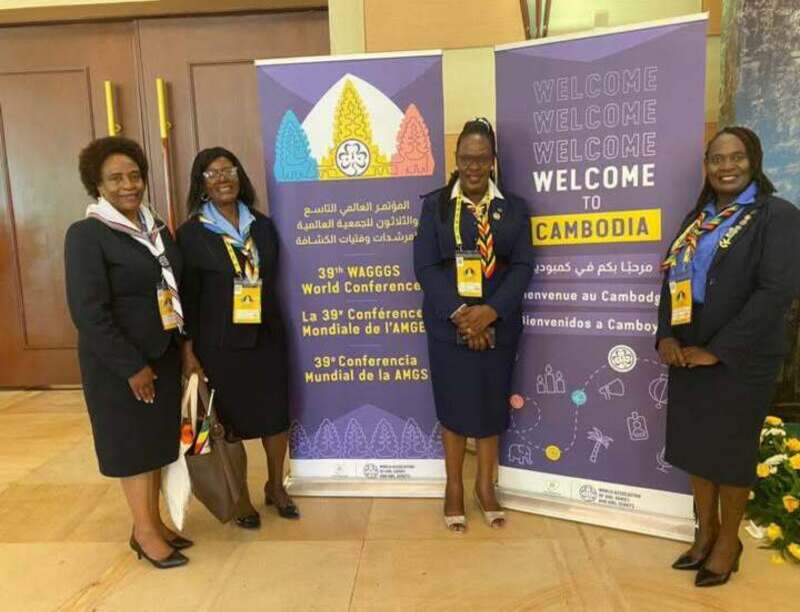
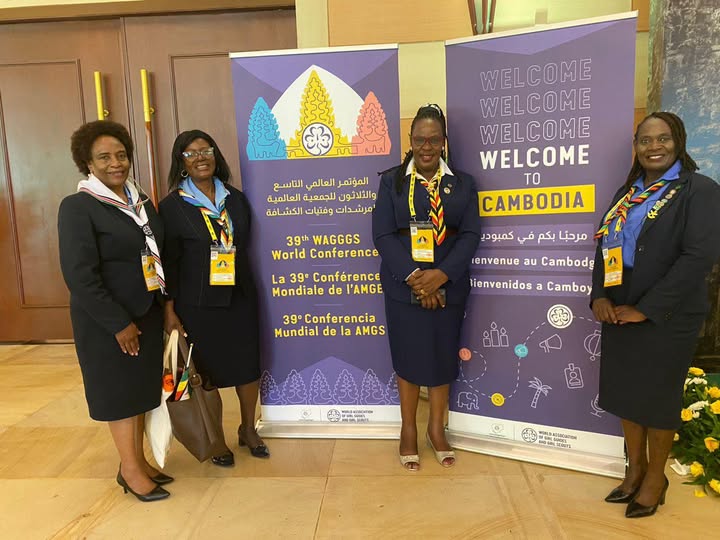

THE Girl Guides Association of Zambia are participating at the 39th WAGGGS World Conference in Cambodia.
The World Association of Girl Guides and Girl Scouts (WAGGGS) is the largest global voluntary movement dedicated exclusively to empowering girls and young women. Reaching over 11.2 million members across 153 countries, WAGGGS equips females with leadership skills, non-formal education, and opportunities for community advocacy.
The conference is being held in Angkor Wat, in Cambodia’s northern province of Siem Reap, one of the most important archaeological sites of Southeast Asia.
It is being held under the theme “We see. We care. We act.”
Zambia’s representative, Chief Commissioner Mary-Jane, spoke to the Young Mail in a conference call from Cambodia, where she shared how the theme reflects the overall goals of the Girl Guide as they take part in community activities.
“We see and observe what is happening in society, we care and begin to think to relevant course of action to being impact in that situation and this is what leads us to act. Together united in friendship, collaboration and a shared commitment to empowering girls and young women through the Guiding Movement,” she said.
“To celebrate the 39th WAGGGS World Conference and its connected events in Cambodia 2026, we created a unified set of logos inspired by the iconic outline of Angkor Wat — a powerful symbol of Cambodian culture and unity,” their website indicated.
We see. – Focused on the Get Ready for World Conference, a space for discovery, networking and the beginning of the journey to the World Conference for young people.
We care. – A key value at the OB-PS Event, this represents the commitment and empathy of OB-PS members in supporting and investing in the lives of young people in our Movement.
We act. – Central to the World Conference, this reflects our shared determination to turn our vision and compassion into meaningful action positively shaping the lives of young people.
Angkor is one of the most important archaeological sites in South-East Asia. Stretching over some 400 km2, including forested area, Angkor Archaeological Park contains the magnificent remains of the different capitals of the Khmer Empire, from the 9th to the 15th century.
They include the famous Temple of Angkor Wat and, at Angkor Thom, the Bayon Temple with its countless sculptural decorations.
UNESCO has set up a wide-ranging programme to safeguard this symbolic site and its surroundings.
MARGARET CHISANGA, Lusaka.