
- Maryner is also part of the European Union (EU) Youth Sounding Board, where young people advise on how EU programmes can better respond to the needs of their generation
LUSUNGU CHIKOWELA
Lusaka
AT 22, Maryner Lungu has already spent five years working in youth and NGO spaces, making sexual and reproductive health advocacy a central part of her journey.
When people tell Maryner that she talks about sex too much, she laughs about it because she believes conversations about sex, HIV, contraception and young people’s health are not something to whisper about.
“I have spent the past five years learning, researching and having conversations around sexual reproductive health,” she said.
And it all started when she was just 17.
At the time, someone she knew contracted HIV, became ill and eventually died. That period left her with questions, resulting in her learning more about HIV and eventually becoming a volunteer peer educator at Chadiza Urban Clinic, where she was trained in areas including puberty, sexually transmitted infections, contraception and reproductive health.
For the last five years, she has gained further experience in youth advocacy, research and non-governmental spaces.
Maryner is currently a third-year Development Studies student at Cavendish University.
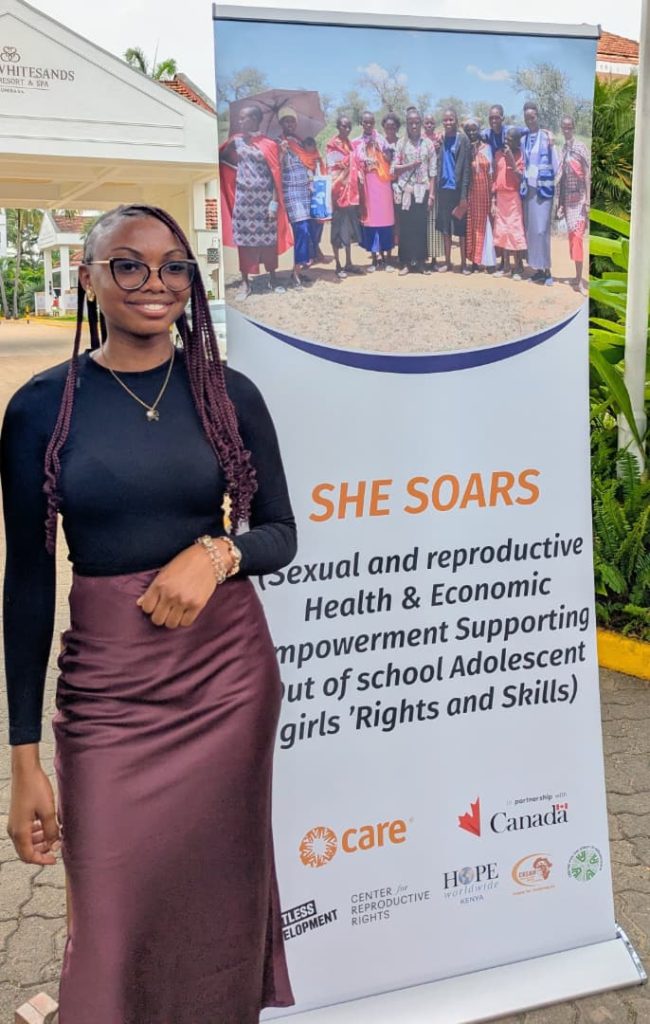
“I also serve on the Youth Advisory Board at Restless Development and am a co-chair of the She Soars project, which operates across Zambia, Kenya and Uganda,” she said.
Maryner is also part of the European Union (EU) Youth Sounding Board, where young people advise on how EU programmes can better respond to the needs of their generation.
She is also a founding member of Empower Youth Coalition, a youth collective she established with friends to create opportunities for young people.
Her work focuses on young people’s access to the right information and services on issues of sexual and reproductive health.
“I am interested in the realities young people face when trying to access that information and care,” she said.
For Maryner, the conversation is bigger than simply telling young people to make responsible choices.
“I want to understand whether young people are actually being given the information, services and support they need to make those choices in the first place,” she said.
That has led her to explore questions around adolescent SRHR and the relationship between Zambia’s legal framework and young people’s access to sexual health services.
Maryner shared that these experiences have taught her that advocacy is about understanding issues, listening to the people affected by them and knowing how to take their concerns into spaces where decisions are made.
Maryner’s work recently took her to Windhoek, Namibia, where she represented Zambia at the Sixth SADC Students and Youth Conference on Education and Sexual Reproductive Health.
The regional gathering provided an opportunity for regional participation in conversations about how policy can better respond to young people’s realities.
For someone with an impressive list of responsibilities, Maryner remains conscious that she is still a student figuring out her own future.
Balancing university with advocacy, research, meetings and youth programmes has required her to become deliberate about her time.
Her Development Studies degree has also given her another lens through which to understand the issues she works on.
Rather than seeing youth health as an isolated problem, she is learning to look at the systems surrounding it — education, policy, communities, institutions and opportunities.
Maryner’s advice to other young people is surprisingly simple.
“Find something that genuinely interests you, find people who can guide you, and start before you feel completely ready,” she said.
Her journey has also taught her the importance of mentorship.
She encourages young people to find mentors for different seasons of their lives.
Maryner is optimistic about future plans.
“My future is broad,” she says.
She hopes to continue working in youth development, potentially work with the European Union, establish her own organisation and grow the initiatives she has already begun.
For now, she is still learning and building.
The lesson, she says, is not to wait until someone comes along to tell you exactly what to do.