
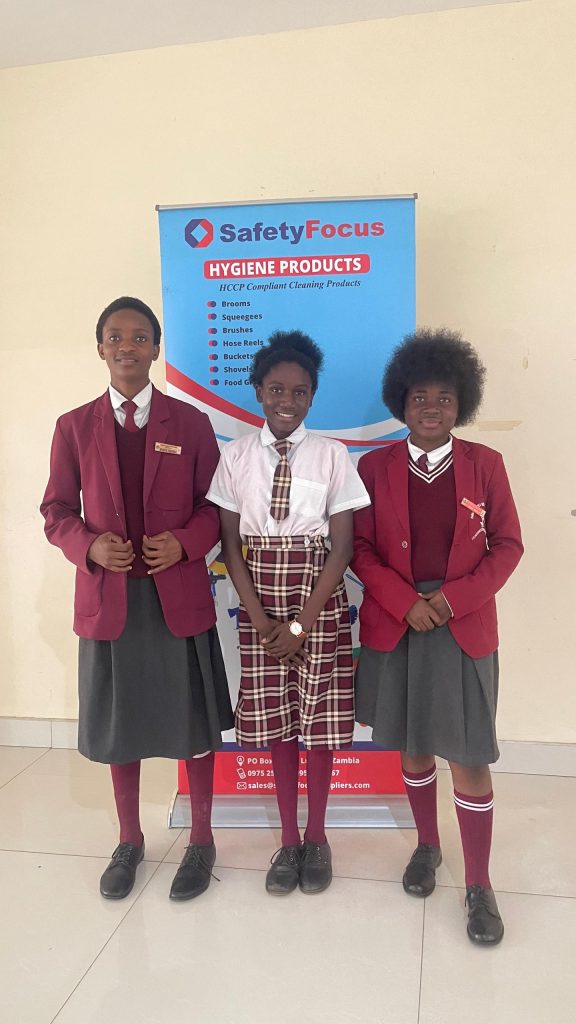
PUPILS from different schools across Lusaka gathered at Government Complex recently for the Free School Safety & Career Conference, an initiative aimed at equipping young people with critical life-saving skills and career guidance.
Safety Focus Company, in partnership with the Ministry of Education, organised the conference.
During the event, learners received training on road, health and fire safety to help them identify and respond to hazards in their communities.
Elizabeth Chovwa, a 16-year-old pupil at Kabulonga Girls Secondary School, learnt various dangers young people encounter daily and how they can protect themselves from danger.
“I learnt about road safety, health safety and fire safety. I believe this programme was mainly to educate us about the different dangers that we face, how we can overcome them and, if we are not able to completely eradicate them, how we can control them,” she said.
She encouraged young people to be conscious of the dangers in their communities.
Elizabeth also said practical fire safety lessons were taught during the conference, including the “Stop, Drop and Roll” technique used when clothing catches fire.
“I learned to stop, drop and roll when our clothes catch fire. When we move more, oxygen causes combustion. When we drop to the ground, we are stopping the fire from spreading. Rolling on the ground, we are smothering the fire,” she said.
Pupils also learnt how to use a fire extinguisher through the acronym ‘PASS’ method, which stands for ‘pull’, ‘aim’, ‘squeeze’ and ‘sweep’.
“Users should first pull the pin on the extinguisher, aim at the base of the fire, squeeze the handle to release the extinguishing agent, and sweep from side to side until the fire is put out,” she said.
Deborah Ndhlovu, a 15-year-old Form Two pupil at Kabulonga Girls Secondary School, said the conference provided lessons that every young person should know.
“The safety programme was here to educate pupils and teachers on how they can protect themselves at home or on the road,” she said.
“If a person has been electrocuted, one shouldn’t touch the person directly because they might also get electrocuted. Instead, you should use a stick or a piece of wood to separate the person from the source of electricity.”
Deborah also urged young people to exercise caution when crossing roads.
“Use zebra crossings whenever possible and observe traffic lights. When the light is red, vehicles should stop and pedestrians can cross safely. When it is green, vehicles should move and pedestrians should wait,” she said.
She said some accidents can be prevented if people pay attention to safety guidelines and remain alert to their surroundings.
Limpo Namakau, a teacher at Kabulonga Girls Secondary School, called for the establishment of safety clubs in schools, describing safety as an essential aspect of life that should be integrated into learners’ daily experiences and future careers.
“We have been taking safety for granted, but it is not just about protection from harm. It is also a career, and it is life itself,” she said.
Ms Namakau said safety is relevant in homes, schools, workplaces and every environment where people live and interact.
“There would be no other careers without safety because people need to stay alive and be protected from harm to pursue their dreams and professions,” she said.
She urged stakeholders to continue investing in safety awareness programmes to help prevent accidents, injuries and loss of life.
By IRED TEMBO, Lusaka